

Most people don’t know this about me, but I’m a serious Lego nerd (to the point where I know things you literally can’t find online, from the history of the company, to random facts on specific sets, to a whole bunch of other nerd information I seldom get to share with folks). I even used to memorize the individual set numbers (4501 is my all-time favorite).
Internally at Lego, they call this audience AFOLs: adult fans of Lego. Given that Lego is a toy company, you’d think customers would eventually age out of the brand, but I, like many others, am living proof–that’s not the case.
In fact, according to Bricket, while 18+ Lego made up roughly 10% of sets released in 2025, they accounted for ~36.4% or of all RRP (recommended retail price), amounting to ~$16,488.

In 2026, Lego even released the most expensive set of all time at $1,000. And recently, I purchased the brand-new $650 Lord of the Rings (LOTR) Minas Tirith set from the Lego Icons theme.
The reality is that if you’ve purchased Lego in your lifetime, one of three things likely happens next:
You become a parent and purchase it for your children
You become an AFOL and purchase it for yourself
Or, even better, you do a bit of both
From a lifecycle perspective, it’s fascinating how this relationship compounds over time. Here's a realistic example based on my own buying over the last 19+ years:

Lego doesn’t lose customers as they grow up. The brand grows with them, and that lifelong loyalty is what makes this toy company so unique.
This post is about the genius CRM strategy Lego uses to turn every customer into an AFOL, and I'm going to map out exactly how it works and why every brand should copy this playbook.
Lego’s business model
Before I dive into the actual lifecycle program, I’m going to give a really high-level breakdown of how the business sets the stage because every decision the lifecycle team makes ladders up to these directives. The whole business is built around quarterly product launches, where new sets ripple through the entire product catalog. And that catalog falls into two buckets:
Licensing: Themes like Star Wars, F1, and FIFA, where they pay to use someone else's IP in exchange for cultural relevance and audience reach.
Owned IP: Themes like Ninjago, City, and Technic, which Lego creates in-house and keeps the full margin on.
For most of Lego’s history, the business was built around wholesale retailers. The company would sell inventory to big-box retailers like Target and Walmart, which meant Lego had little way of actually interacting with the end customer.
But this has been changing drastically as the company increases their investment in direct-to-consumer. If you’re paying attention, you see it everywhere, from the introduction of QR code scanning to earn loyalty points to the recent launch and rebrand of their loyalty program, LEGO Insiders. Believe it or not, a few years ago, the loyalty program was basically unusable, but today, I’d say it’s one of the top five loyalty programs in the world.
How the lifecycle program works
Now that Lego has such a robust digital D2C motion, they can sell directly to their customers and nurture those relationships to create more AFOLs. This is where the lifecycle program comes into play. Over the years, I’ve collected hundreds of emails, and after synthesizing them, I’ve seen that the team really focuses on a few core use cases:
| ||
| ||
| ||
| ||
| ||
|
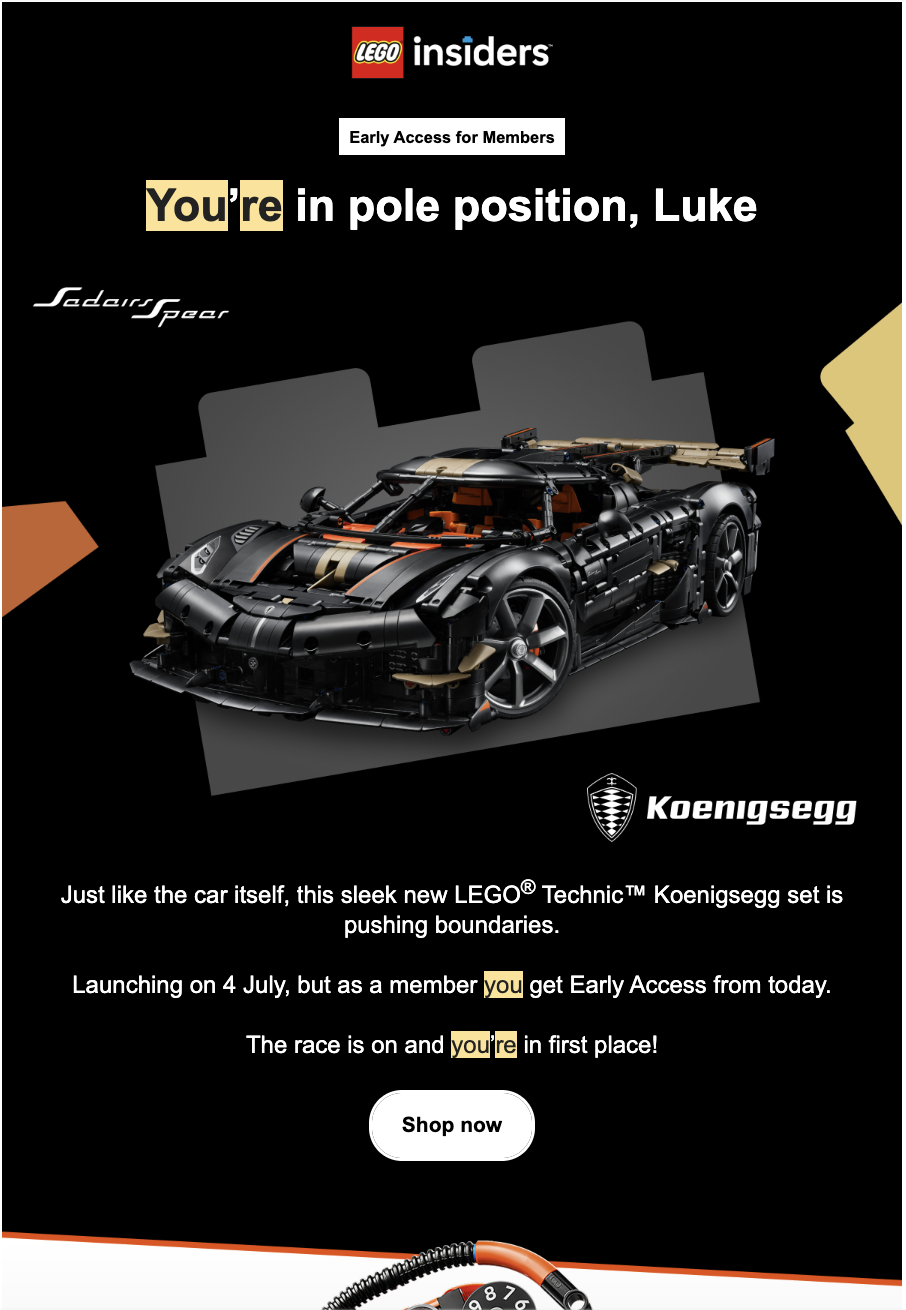
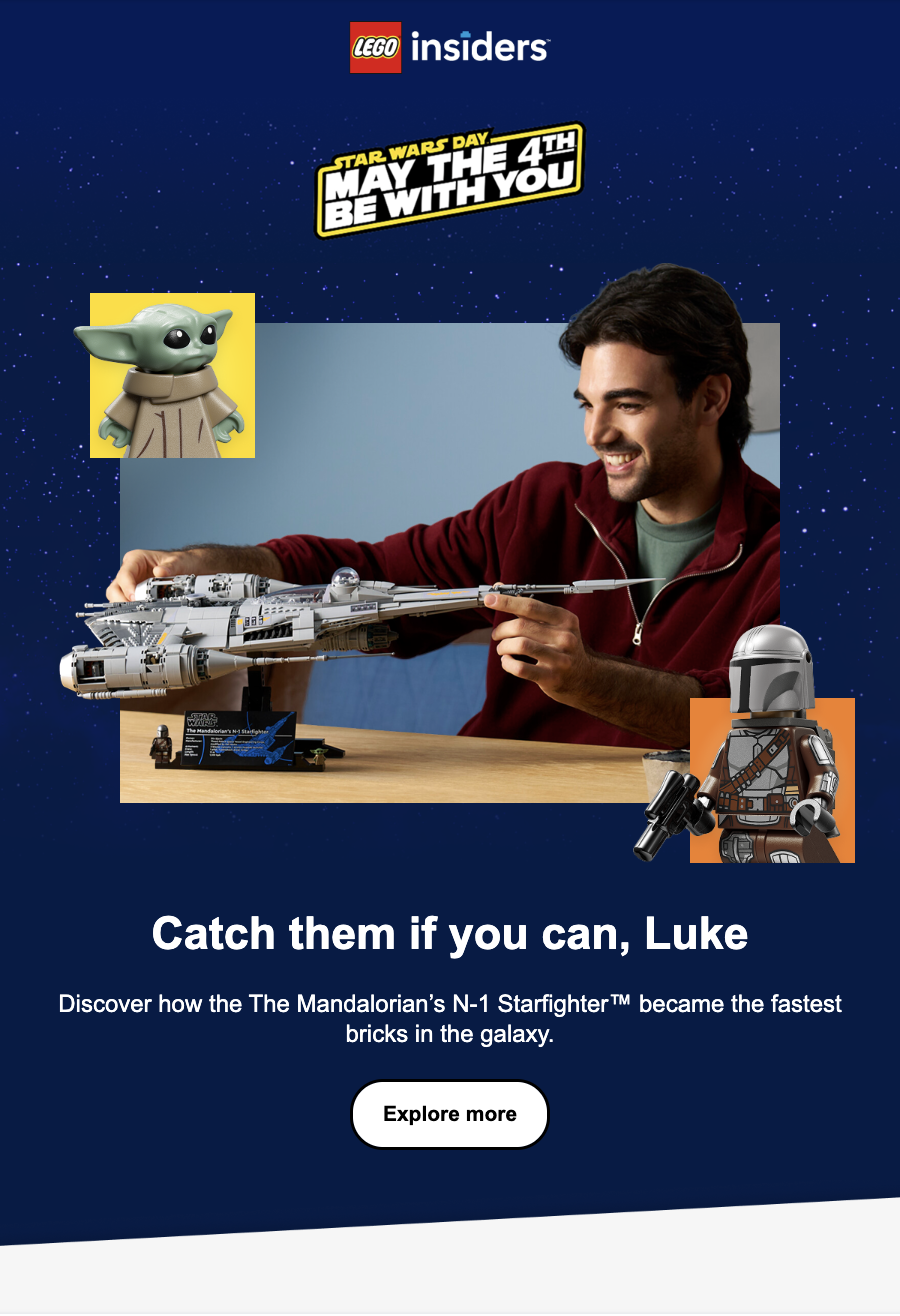
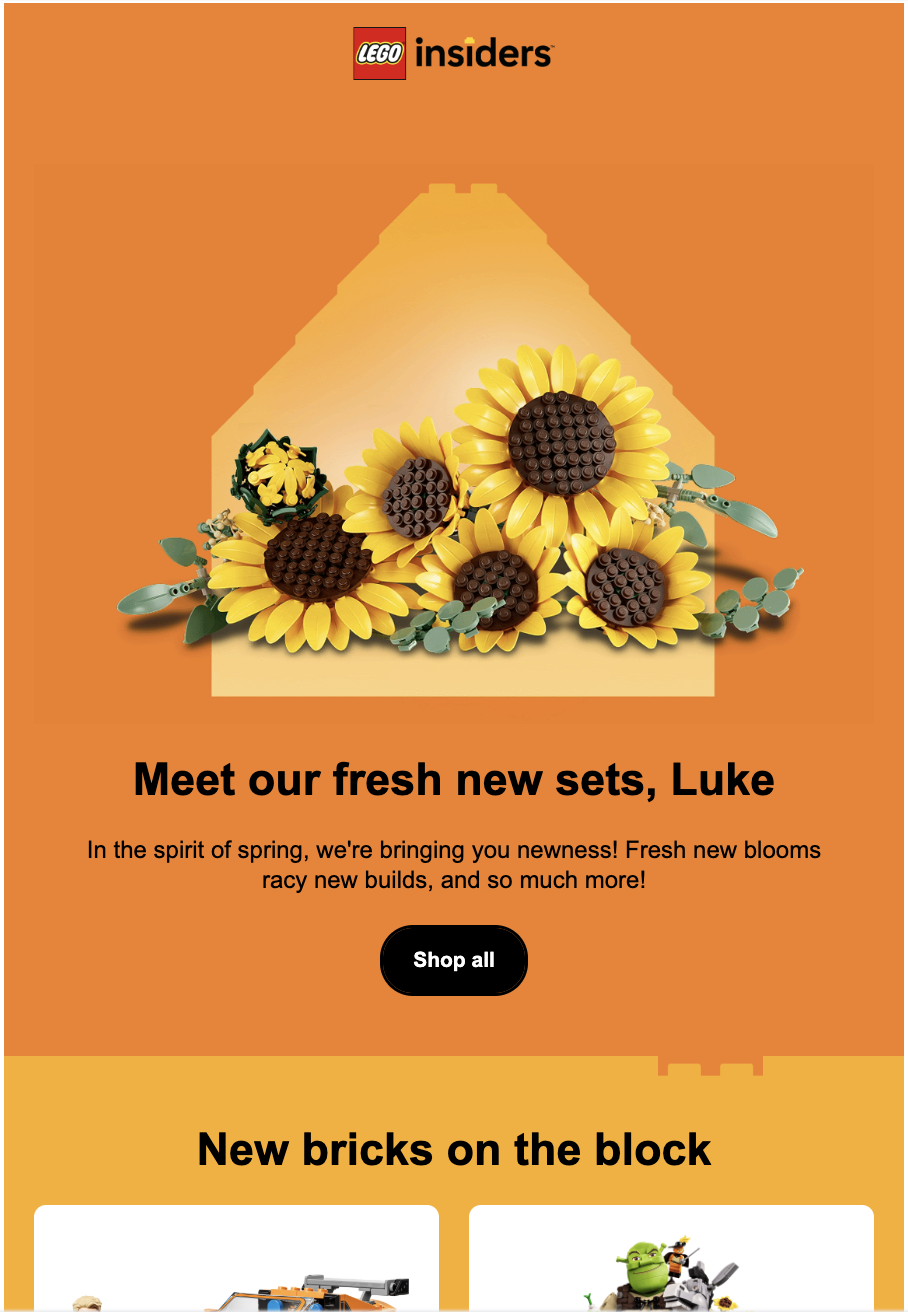
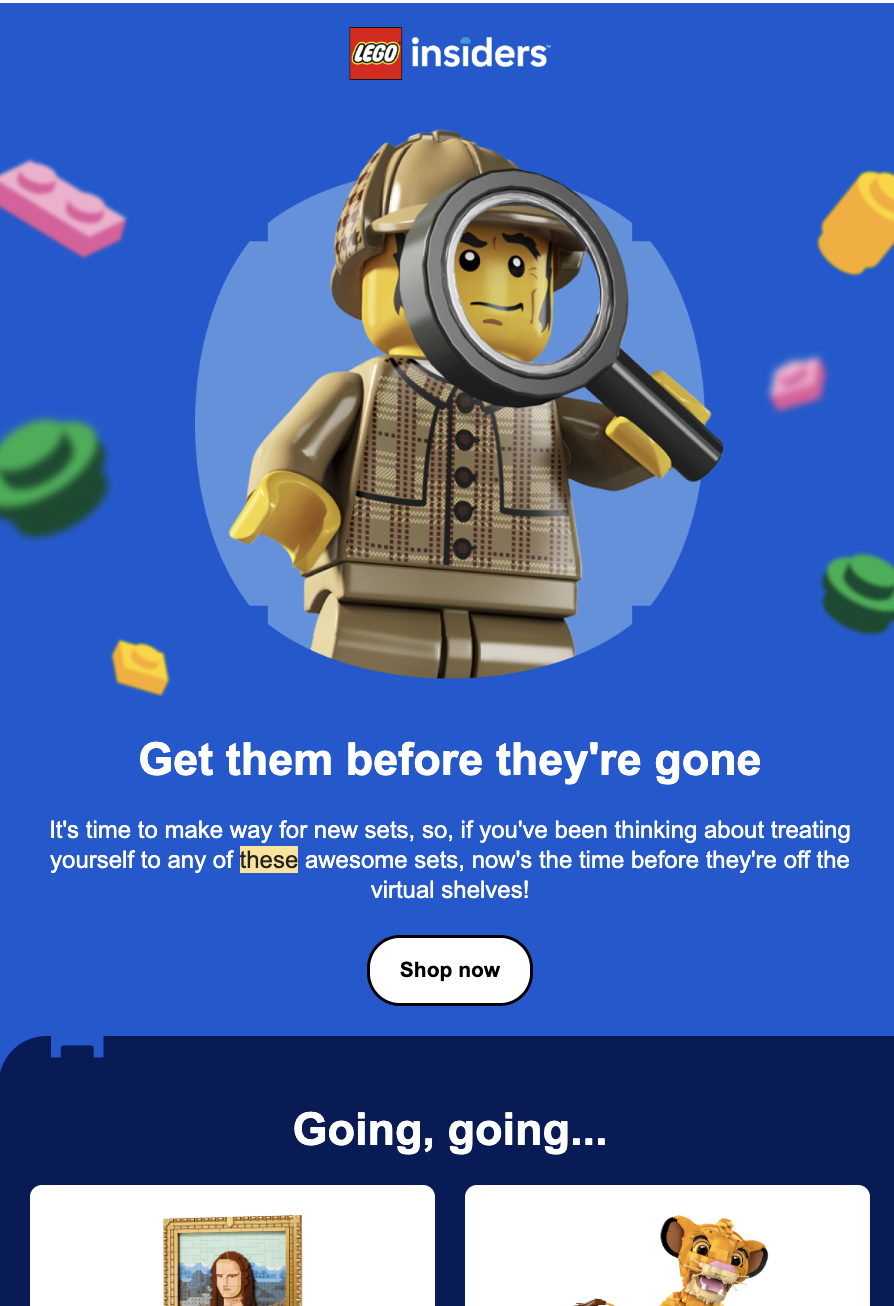
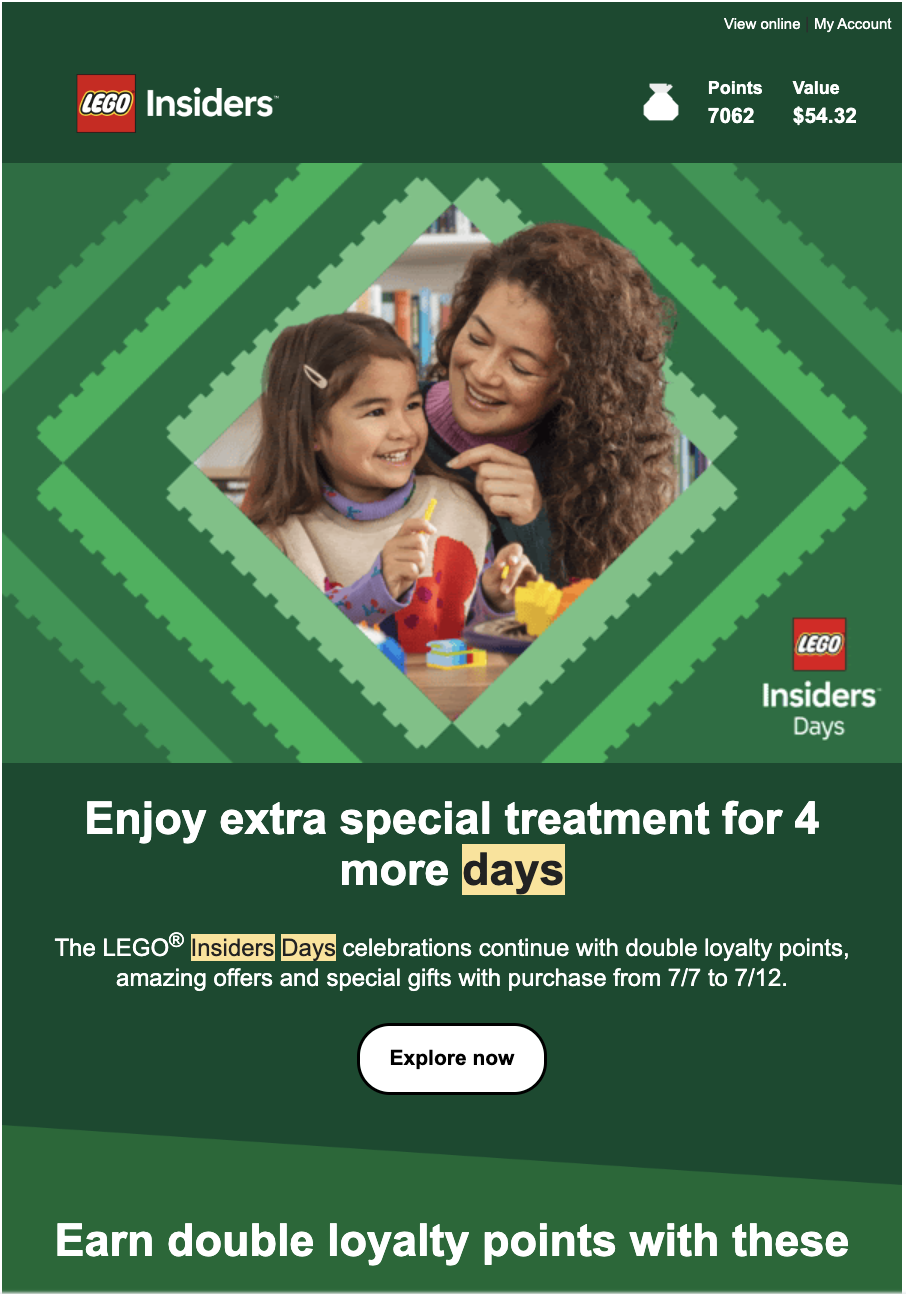
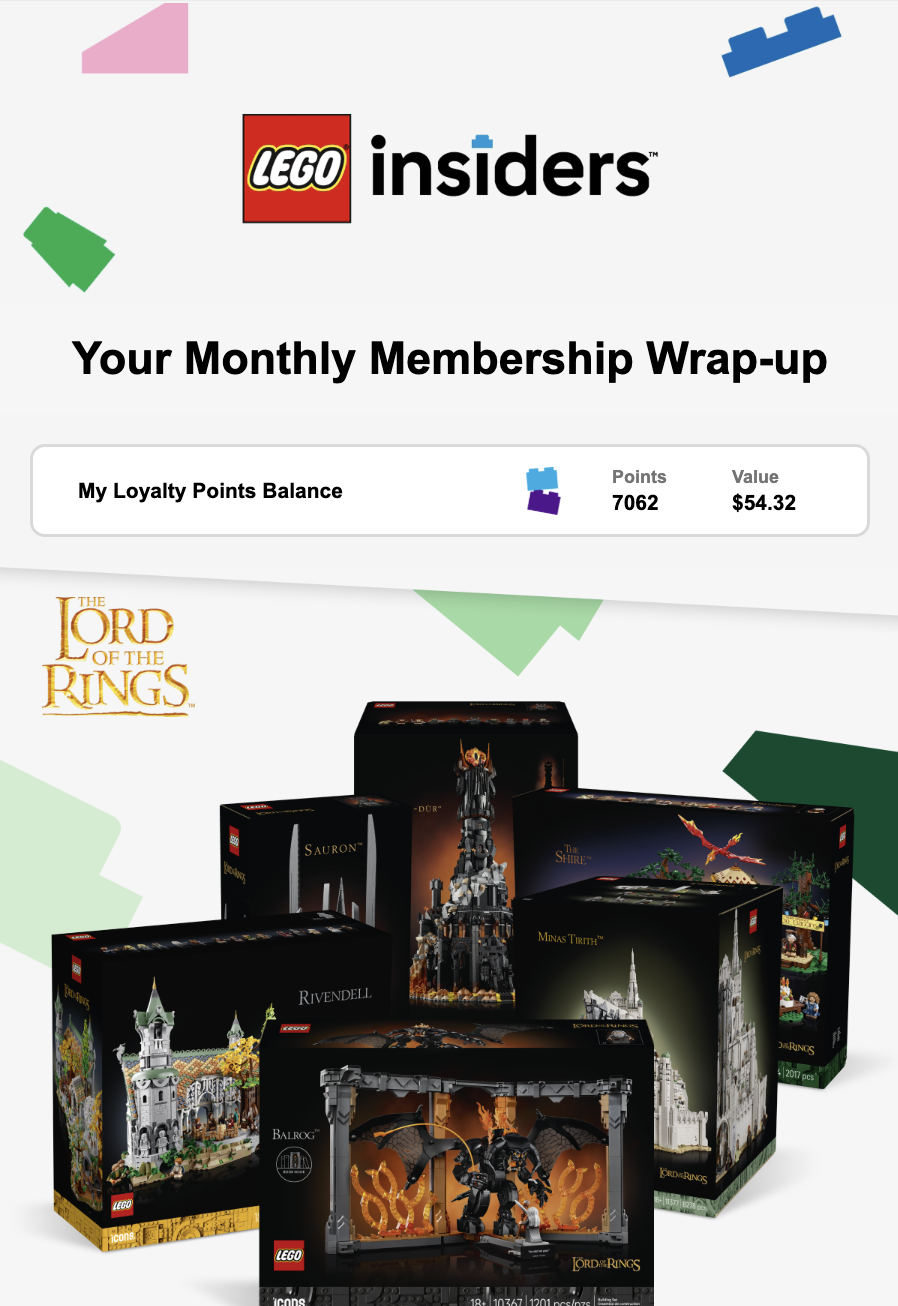
These campaigns run as repeated cycles throughout the year. It’s a very sophisticated yet simple approach that matches the needs of the business and the buying behavior of the customer.
The entire program is anchored around three repeatable levers:
They build anticipation before launch
They reward their most loyal customers with early access
They use scarcity to drive urgency and action
While many retailers try to drive action through discounts, Lego drives action through the loyalty program itself. For brands, there’s an important lesson here, because if the only lever that drives action is discounting, it probably means the loyalty program isn’t doing its job, and it’s misaligned to the underlying behavior and motivation of your customers.
The anatomy of an AFOL journey
In all my journey breakdowns, I don’t think I’ve ever done a brand I’m so intimately familiar with. So, I’m going to break down and map out my personal buying journey leading up to the launch of Minas Tirith on June 1, 2026. Here’s a rough timeline of all the touchpoints that influenced my journey:

My actual buying journey to buy the $650 Minas Tirith set
I don’t know if Lego controls the rumors before a launch across Reddit and YouTube. But after following Lego my whole life, I know one thing: this is the playbook for every product release. My decision to purchase isn’t solely based on this coordinated series of touch points.
In fact, there’s one more secret weapon the lifecycle team keeps in their CRM tool belt, which, funny enough, is the biggest driver of my launch-day purchases: GWPs.
GWPs. The secret weapon.
Gift with purchase (also known as GWPs) is not a novel concept in retail. In fact, many companies have been leveraging these for years in their loyalty programs. I own every single LOTR set Lego has ever made, so when they attach an exclusive gift to a launch, purchasing isn’t optional for me. Not buying a new product at launch means my collection is only ~99% complete (if you’re a collector of anything, you know this exact feeling).
What makes Lego’s GWP so different is how they leverage it for their product launches. The GWP is limited, finite, and sells out extremely quickly. The cost of not buying on launch day is incredibly high. For context, I once paid $150 aftermarket on a GWP because I missed the window.
In fact, for some AFOLs, GWPs are more important than the set itself (which is absolutely wild). As an AFOL myself, I’d actually say that GWPs are the biggest influencing factor in driving big-ticket purchases. And, depending on desirability, I’d even bet that these outperform discounts. Which makes sense when you think about it because the only person who’s going to be purchasing a $650 Lego set is someone who cares deeply about rare collectibles (like me).
Why this works so well
For many retailers, a small portion of customers drives a disproportionate amount of revenue for the business. The genius of Lego is that they never stopped being a kids' company. They just engineered a flywheel to turn every fan into a proud AFOL. And more AFOLs means more people buying premium sets and eventually buying more Lego for their own kids. And the wheel keeps compounding the longer it spins.
But the real lesson for lifecycle teams isn't the flywheel, it's how Lego built a repeatable system to activate their most valuable audience at every product launch. The entire system is reverse-engineered and designed around how their best customers already think and move. The proof is all in the receipt. As of July 13, the set I purchased is currently out of stock. And this product launch success is not an outlier.

This is the outcome of the model they’ve engineered. I know because I am the customer, and I’ve been watching these types of campaigns for years and years.
One more fun fact…
Did you know the actual plural of Lego is in fact Lego? So saying Legos is actually grammatically incorrect, even though it sounds right and rolls right off the tongue. Sorry, I had to share that. It’s a point of contention for me 😀.